
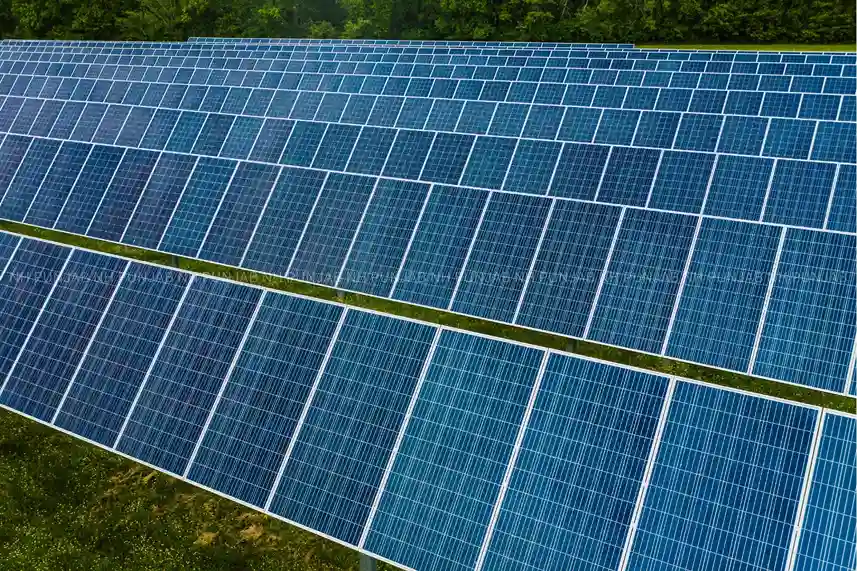
300 MW Solar Tender Punjab Shakes Up Clean Energy
Punjab’s clean energy plans gained a major boost this week as SJVN Green Energy Limited (SGEL) issued a new 300 MW solar tender in Punjab, inviting developers to build grid-connected solar projects across the state under an engineering, procurement, and construction model. The tender aims to add large-scale solar capacity while supporting Punjab’s long-term renewable energy and climate goals, with bid submissions due in mid-December 2025 and projects to be developed at multiple locations. The move positions Punjab as a more active player in India’s solar growth story, and it is already drawing interest from major developers familiar with utility-scale solar projects.
The new 300 MW solar tender in Punjab comes at a time when India is racing to expand renewable energy capacity and cut dependence on fossil fuels. Announced in late November 2025, the tender covers what will be a cluster of solar photovoltaic plants spread across Punjab, and it is expected to attract experienced engineering, procurement, and construction (EPC) players from across the country. The tender answers the key questions of what is being built, when bids are due, where the projects may come up, and why Punjab is pushing harder on solar.
Also Read: Mumbai Sensex Nifty Stock Market – Sharp Swing Stuns Traders
The 300 MW solar tender in Punjab, led by SGEL, aligns closely with earlier state-level plans to add at least 300 MW of solar capacity through canal-top and floating solar projects, as well as new grid-connected plants backed by the Punjab State Power Corporation Limited (PSPCL). By combining central public sector expertise with state-level demand for solar power, the tender offers a new opportunity for developers to secure long-term projects while helping Punjab move toward cleaner electricity.
What is the 300 MW solar tender in Punjab?
SJVN Green Energy, a subsidiary of SJVN Limited, has launched an EPC tender to develop 300 MW of grid-connected solar power projects anywhere in Punjab. The total capacity is structured as three separate projects: one of 70 MW, one of 130 MW, and one of 100 MW, all forming part of a broader 300 MW allocation given to SGEL under tariff-based competitive bidding. The main keyword 300 mw solar tender punjab captures this entire package of grid-connected projects.
Out of the 300 MW, 200 MW will be developed under PSPCL’s ET-4 scheme and 100 MW under the ET-2 scheme, ensuring that all the power generated will be supplied into Punjab’s grid under signed power purchase agreements. SGEL has already entered power purchase agreements for this capacity with PSPCL, which provides long-term revenue visibility for developers participating in the tender.
When and where will the projects be developed?
The tender documents specify that bids for the 300 MW solar tender in Punjab must be submitted by December 16, 2025, with the bid opening scheduled on the same day. A pre-bid meeting is scheduled in early December 2025, giving prospective bidders a chance to clarify technical and commercial terms before finalizing their proposals. These dates set a tight but clear timetable for companies that wish to participate.
The projects can be located anywhere in Punjab, with bidders responsible for identifying and arranging suitable land parcels, either through outright purchase or long-term lease arrangements of around 28 years. This flexible siting approach allows developers to choose sites with good solar radiation, favorable grid access, and lower land costs, while still feeding power into PSPCL’s network.
Why is Punjab pushing a 300 MW solar tender now?
Punjab has been steadily increasing its focus on clean energy, and earlier policy decisions already targeted 300 MW of solar via canal-top and floating projects on reservoirs and lakes. The new 300 mw solar tender punjab complements these plans by focusing on grid-connected terrestrial solar plants that can be built at different sites across the state. Together, these efforts help the state diversify its power mix and cut emissions linked to coal-based generation.
The state also faces rising electricity demand and pressure to reduce power purchase costs over the long term, making fixed-tariff solar contracts an attractive option. By locking in solar capacity at competitive tariffs, Punjab aims to shield itself from fuel price volatility while using its strong solar resource to support sustainable development.
Key features of the tender structure
The 300 MW tender follows a single-stage, two-envelope bidding process, in which bidders submit separate techno-commercial and financial bids. After an initial evaluation of technical eligibility, the qualified bidders will participate in a financial stage that may include an online reverse auction to discover the lowest tariff or cost. This structure is designed to maintain transparency and promote competition among experienced EPC players.
SGEL’s scope includes supplying solar modules free of cost for two of the three projects, while the contractor must handle complete EPC and certain module-related logistics. For the 70 MW project, contractors are expected to procure modules themselves, whereas for the 130 MW and 100 MW projects, SGEL will provide modules without charge, and the contractor will manage handling and transportation.
Financial requirements for bidders
Bidders must submit an earnest money deposit that varies by project combination, ranging roughly from about ₹56.7 million to ₹206.7 million. A non-refundable tender document fee of around ₹5,000 to ₹5,900 plus applicable taxes also applies, ensuring that only serious participants purchase the detailed bid documents. In addition, successful bidders will need to provide a performance bank guarantee equal to a small percentage of the total contract value after receiving the letter of award.
Developers must also demonstrate a minimum annual average turnover in line with project size, which may range between approximately ₹850 million and ₹3.1 billion. These financial conditions aim to ensure that only developers with strong balance sheets and the capacity to execute large infrastructure contracts are allowed to participate in the 300 mw solar tender punjab.
Technical eligibility and experience norms
To qualify, bidders must have executed a cumulative solar EPC capacity of at least 30 MW, including at least one solar project of 10 MW that has been in successful operation for a minimum period. Some related reports also mention that companies interested in bidding should have experience in developing grid-connected solar power plants with a cumulative capacity of at least 50 MWp, including one plant of 10 MWp or more operating for at least six months. These conditions are typical for large solar tenders, which prefer experienced players over first-time entrants.
The eligibility criteria also cover experience in building at least one electrical substation at or above 33 kV, which must have been operational for several months. This requirement reflects the importance of reliable grid evacuation systems and high-quality balance-of-system work in large-scale solar power projects.
Scope of work for EPC contractors
The EPC contractors selected under the 300 MW solar tender in Punjab will be responsible for the entire project lifecycle up to commissioning. This includes detailed engineering, design, procurement of all balance-of-plant equipment, civil and electrical works, installation, testing, and grid synchronization. Contractors also need to coordinate closely with local authorities and transmission utilities for right-of-way, permits, and grid connectivity.
Beyond initial construction, the winning bidders must provide comprehensive operation and maintenance services for three years from the commercial operation date. This O&M obligation covers the solar plants as well as the associated evacuation infrastructure, ensuring that SGEL and PSPCL receive stable power output and timely fault resolution during the early years of project life.
How this tender fits into Punjab’s solar roadmap
The 300 mw solar tender punjab builds on earlier state government decisions to install 300 MW of solar using innovative formats such as canal-top and floating solar projects, implemented by the Punjab Energy Development Agency. Those projects were planned under a build–operate–own model, with viability gap funding proposed from central government sources to bridge financial gaps. While the new tender focuses on different sites and structures, it fits into the same broader roadmap of scaling up solar power.
Also Read: Tata Sierra Tata Motors Stunning Comeback, New Features
Punjab’s utilities are also sourcing additional solar power from outside the state, including projects in Rajasthan that supply clean electricity to PSPCL. By combining in-state capacity through tenders like this with external procurement, Punjab is building a more diversified solar portfolio that can reduce dependence on costly conventional power.
Expert opinion and industry reaction
Energy sector analysts see the tender as a strong signal that Punjab is ready to compete for large-scale solar investment. One renewable energy analyst quoted in a sector report said that such tenders “offer a valuable opportunity for both established and mid-sized EPC players, because they combine a bankable public-sector offtaker with flexible project locations and a clear implementation timeline.” This kind of expert view underlines how attractive a well-structured tender can be for the solar industry.
Public reaction among industry watchers and clean-energy advocates has been largely positive, especially on social media platforms where sector professionals share tender alerts and quick takes. Many see the tender as not just a project opportunity but a sign that Punjab is moving from announcements to concrete procurement in its renewable energy plans.
Potential benefits for Punjab
If implemented successfully, the 300 MW of new solar capacity can provide a meaningful share of Punjab’s daytime electricity demand, reducing the need for coal-based power and cutting emissions. Solar projects also tend to have lower marginal costs after construction, which can help reduce overall power purchase costs for the state utility over the project life.
The tender is also expected to bring investment, employment, and skill development to the districts where the solar parks will be located. Local communities can benefit from construction jobs, service contracts, and improved infrastructure such as access roads and grid lines near project sites.
Challenges and risks
Despite the positive outlook, the 300 mw solar tender punjab faces some potential challenges, including land acquisition issues, grid congestion, and possible delays in permits or clearances. Finding contiguous land parcels with suitable irradiation, grid proximity, and minimal social or environmental conflicts can be complex and time-consuming for developers.
Developers must also manage price volatility in key components such as inverters, structures, and labor, even though modules for two projects will be supplied by SGEL. Any delays in module supply or grid connectivity could affect commissioning timelines and raise costs, putting pressure on EPC margins in a competitive bidding environment.
What developers should do next
Companies interested in the tender first need to obtain the official bid documents and study the technical, financial, and legal conditions in detail. They should evaluate which project combinations they want to bid for, assess their land bank options in Punjab, and run financial models to estimate expected returns under different cost and tariff scenarios.
Attending the pre-bid meeting will be important for clarifying any doubts about grid connection points, land responsibilities, module supply schedules, and performance guarantees. Developers must also prepare to demonstrate past experience, submit earnest money deposits, and arrange for the required bank guarantees before the bid deadline.
FAQs on the 300 MW solar tender in Punjab
What is the 300 mw solar tender punjab?
The 300 MW solar tender in Punjab is an EPC tender issued by SJVN Green Energy Limited to develop 300 MW of grid-connected solar power projects across the state, divided into three projects of 70 MW, 130 MW, and 100 MW under PSPCL schemes.
Who is the tendering authority for the 300 MW solar projects?
The tendering authority is SJVN Green Energy Limited, a wholly owned subsidiary of SJVN Limited, acting on the basis of capacity allocated through tariff-based competitive bidding and tied up with PSPCL via power purchase agreements.
What is the bid submission deadline for the 300 MW solar tender in Punjab?
The deadline to submit bids for the 300 MW solar tender in Punjab is December 16, 2025, and bids are scheduled to be opened on the same day.
Where can the solar projects be located?
The solar projects can be set up at any suitable locations in Punjab, with developers responsible for arranging land either through purchase or long-term lease arrangements of around 28 years.
What are the main financial requirements for bidders?
Bidders must submit an earnest money deposit ranging from about ₹56.7 million to ₹206.7 million, pay a tender document fee in the range of about ₹5,000 to ₹5,900 plus taxes, and meet minimum annual turnover thresholds between roughly ₹850 million and ₹3.1 billion.
What technical experience is required to qualify?
Developers are required to have executed a cumulative solar EPC capacity of at least around 30 MW, including one project of at least 10 MW that has been operating for several months, and must have experience in building at least one 33 kV or higher substation.
Who will supply the solar modules for the projects?
For the 70 MW project, the EPC contractor must procure modules independently, while for the 130 MW and 100 MW projects, SGEL will supply the modules free of cost and the contractor will handle the logistics of receiving and installing them.
How long is the operation and maintenance period in the contract?
The winning bidders must provide full operation and maintenance services for the solar plants and associated power evacuation systems for three years from the commercial operation date.
How does this tender support Punjab’s renewable energy goals?
The 300 MW tender adds significant new solar capacity to Punjab’s grid and supports earlier state plans for 300 MW of canal-top and floating solar projects, thereby helping the state diversify its power mix and reduce emissions.
Why is the tender important for developers?
The tender offers developers a chance to secure large, long-term solar projects backed by a state utility off-taker, with clear tender terms, defined project sizes, and growing demand for clean power in Punjab.